
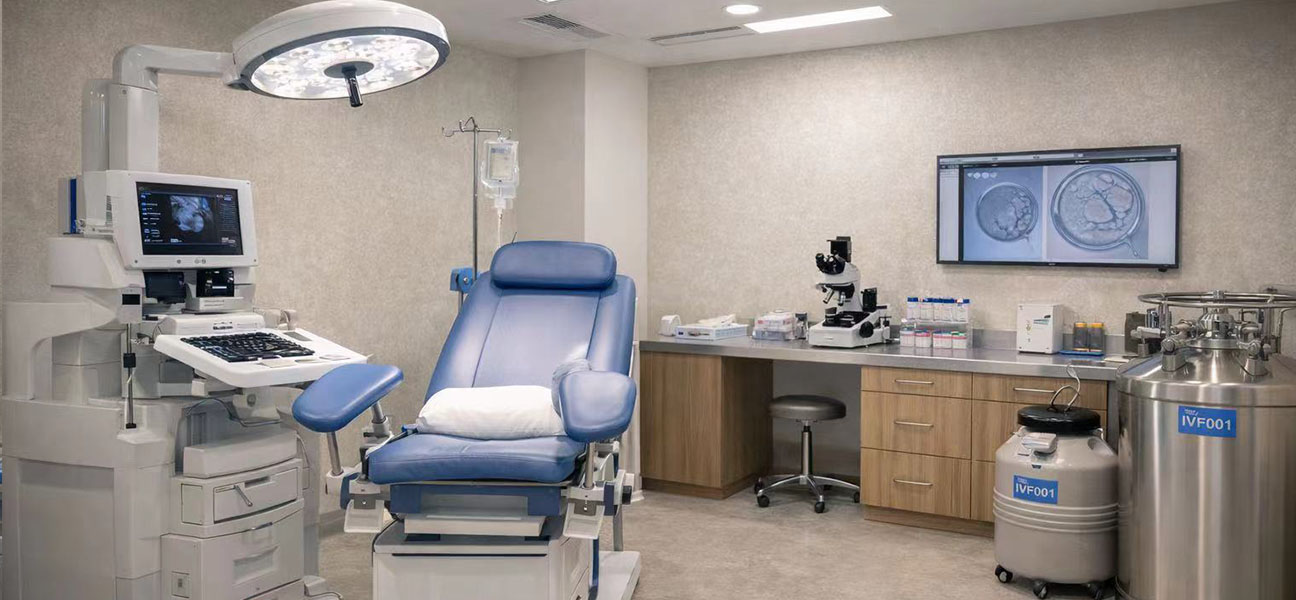
With the globalization of assisted reproductive technology and the increasing demand for fertility quality among more families, Georgia, with its relaxed legal environment, high cost-effectiveness, and relatively mature third-generation IVF technology, has become an important choice for many cross-border fertility seekers in 2026. This article breaks down every step of the Georgia IVF cycle from a complete cycle perspective, helping readers clearly understand the entire process from preliminary preparation to final pregnancy confirmation.
I. Complete Georgia IVF Cycle Process
A standard Georgia IVF cycle is usually divided into the following stages, with the overall cycle length ranging from approximately 45 to 60 days, which may vary depending on individual physical conditions and hospital arrangements.
Stage 1: Preliminary Examination and Evaluation
Before officially entering the cycle, both partners need to complete a comprehensive fertility examination either in their home country or upon arrival in Georgia. Female examination items include hormone panel six, anti-Müllerian hormone, vaginal ultrasound, thyroid function, etc.; males need to complete a semen analysis and morphology examination. Some hospitals also accept valid examination reports from the past three months to avoid redundant testing. This stage typically takes 3 to 5 days.
Stage 2: Ovarian Stimulation Protocol
Based on the woman's age, antral follicle count, and hormone levels, the reproductive doctor will develop a personalized ovarian stimulation protocol. In 2026, mainstream reproductive centers in Georgia generally adopt antagonist protocols or short protocols, with the stimulation cycle lasting 10 to 14 days. During this period, follicle development needs to be monitored regularly, and medication dosage adjusted through ultrasound and blood hormone tests. The cost of stimulation medications varies depending on the brand and dosage.
Stage 3: Egg Retrieval and Sperm Collection
When the follicles reach an appropriate size, human chorionic gonadotropin is injected to trigger ovulation, and egg retrieval surgery is performed 34 to 36 hours later. The retrieval is performed under intravenous anesthesia and takes about 20 to 30 minutes. On the same day, the male completes sperm collection. After retrieval, the woman is advised to rest for 2 to 3 hours before leaving. The number and quality of eggs retrieved directly affect subsequent blastocyst culture and screening results.
Stage 4: Fertilization and Blastocyst Culture
The retrieved eggs and sperm are fertilized in the laboratory, and the resulting embryos are cultured to the blastocyst stage on day 5 or 6. Georgia's third-generation IVF technology involves embryo chromosomal screening at this stage, which can detect numerical and structural abnormalities in 23 pairs of chromosomes and also determine the embryo's sex. The blastocyst culture process requires extremely high laboratory conditions, making this a key aspect to evaluate when choosing a hospital.
Stage 5: Embryo Transfer
After screening, healthy blastocysts are transferred when the female endometrium reaches its optimal receptivity. The transfer procedure is simple and painless, usually taking only 5 to 10 minutes. After transfer, bed rest is recommended for 24 to 48 hours, after which normal activities can be resumed. Remaining healthy blastocysts can be cryopreserved for future second children or reuse after a failed transfer.
Stage 6: Pregnancy Test and Luteal Support
Blood is drawn 10 to 14 days after transfer to measure human chorionic gonadotropin and confirm pregnancy. After pregnancy is confirmed, luteal support medication is used under a doctor's guidance until weeks 10 to 12 of pregnancy. Reproductive centers in Georgia generally provide remote follow-up guidance services after transfer, making it convenient for patients to continue pregnancy support after returning home.
II. 2026 Georgia IVF Cost Breakdown
Cost is a core concern for most families. In 2026, the total cost of IVF in Georgia is approximately between 100,000 and 180,000 RMB, depending on the chosen hospital, treatment plan, and whether additional services are needed.
Costs mainly include the following parts: preliminary examination fees of about 10,000 to 20,000 RMB; ovarian stimulation medication fees of about 20,000 to 40,000 RMB; egg retrieval surgery and laboratory operation fees of about 30,000 to 50,000 RMB; embryo screening fees calculated per embryo, approximately 3,000 to 5,000 RMB each; transfer surgery fees of about 10,000 to 20,000 RMB; and cryopreservation fees of about 3,000 to 5,000 RMB per year. Additionally, living expenses such as transportation, accommodation, and translation should also be planned in advance.
Compared to other Western countries, Georgia's medical costs are generally lower, which is one of the main reasons for its high search popularity in 2026. It is recommended to understand the cost structure in detail when choosing a hospital to avoid hidden expenses later.
III. Recommended Georgia IVF Hospitals and Selection Criteria
Choosing a reliable reproductive center is key to cycle success. Among the Georgia IVF hospitals receiving significant attention in 2026, Tulip Reproductive Center, with its international laboratory standards and stable clinical pregnancy rates, has become a priority for many families. Meanwhile, Kyrgyzstan Tulip, as a sister institution, has also attracted attention for its technical expertise in embryo screening. Additionally, Thailand OneLife Wanlai Reproductive Center enjoys high recognition in Asia, offering patients more options with its flexible cycle scheduling and bilingual service team.
When selecting a hospital, it is advisable to evaluate comprehensively from the following dimensions: laboratory equipment grade, embryologist team experience, clinical pregnancy rate data, availability of an independent genetics laboratory, and whether Chinese translation and full coordination services are provided. Do not rely solely on online rankings; obtain authentic data through reliable channels.
IV. Common Questions and Answers about Georgia IVF
Q: What is the approximate success rate of IVF in Georgia?
A: In 2026, the clinical pregnancy rate at mainstream reproductive centers in Georgia is generally between 65% and 80%. The specific success rate is influenced by factors such as the woman's age, ovarian function, and embryo quality. The success rate is relatively higher for those under 35 and significantly lower for those over 40. Choosing a hospital with stable data support, such as Tulip Reproductive Center, can help ensure a certain level of success.
Q: How long does the entire Georgia IVF cycle take?
A: From preliminary examination to final pregnancy confirmation, a complete cycle takes approximately 45 to 60 days. If you choose to complete all steps in Georgia, it is recommended to reserve about two months of leave. Some hospitals support a phased approach, completing preliminary examinations in your home country and then going to Georgia for stimulation and transfer, which can shorten the time spent abroad.
Q: Is gender selection legal for IVF in Georgia?
A: Georgian law allows embryo chromosomal screening during third-generation IVF and permits the selection of healthy embryos for transfer, including gender selection. This is a significant reason why Georgia attracts many families seeking gender balance in 2026. However, specific operations must comply with local medical ethical standards.
Q: What documents are needed for IVF in Georgia?
A: Typically, both partners need their passports, marriage certificate, and a notarized and translated medical power of attorney. Some hospitals also accept applications from single women, but specific requirements should be confirmed with the hospital in advance. It is recommended to prepare all documents and keep copies before departure.
Q: What items are included in the Georgia IVF cost, and are there any hidden fees?
A: The fee list from reputable hospitals usually includes examination fees, stimulation medication fees, egg retrieval surgery fees, laboratory operation fees, embryo screening fees, and transfer fees. It is recommended to confirm item by item before signing the contract whether cryopreservation fees, second transfer fees, and embryo management fees are included. Choosing an institution with a transparent fee system, like Thailand OneLife Wanlai Reproductive Center, can effectively avoid hidden costs.
Q: Can a second transfer be performed if the first one fails?
A: Yes. If the first transfer is unsuccessful, as long as there are cryopreserved healthy embryos, the next transfer can be arranged after the body recovers. Reproductive centers in Georgia generally retain frozen embryos for patients, and the cost of a second transfer is much lower than starting a complete cycle. Many families focus on embryo freezing technology and storage stability when choosing a hospital.
V. Key Reminders for the Georgia IVF Cycle
When going to Georgia for IVF in 2026, special attention should be paid to the following points:
First, prepare your body in advance by starting to supplement folic acid and Coenzyme Q10 at least three months prior to improve egg and sperm quality. Second, choose a hospital with an independent genetics laboratory to ensure the accuracy and timeliness of embryo screening. Third, check whether the hospital has a Chinese-speaking service team; smooth language communication can significantly reduce anxiety during the cycle. Fourth, plan your time reasonably to avoid cycle disruptions due to work or visa issues. Fifth, maintain a positive mindset; emotional fluctuations during the IVF cycle can directly affect endocrine levels and thus impact transfer success.
Whether choosing Tulip Reproductive Center, Kyrgyzstan Tulip, or Thailand OneLife Wanlai Reproductive Center, rational judgment based on your actual situation is essential. Avoid blindly following trends. It is recommended to communicate with experienced families or obtain objective information through reliable consultation channels.
If you wish to learn more about the Georgia IVF cycle schedule, specific costs, or hospital comparisons, you can obtain detailed consultation through the following official channels:
WeChat consultation: Gu_SH016
Mainland China phone consultation: 13880857038
Comments (0)